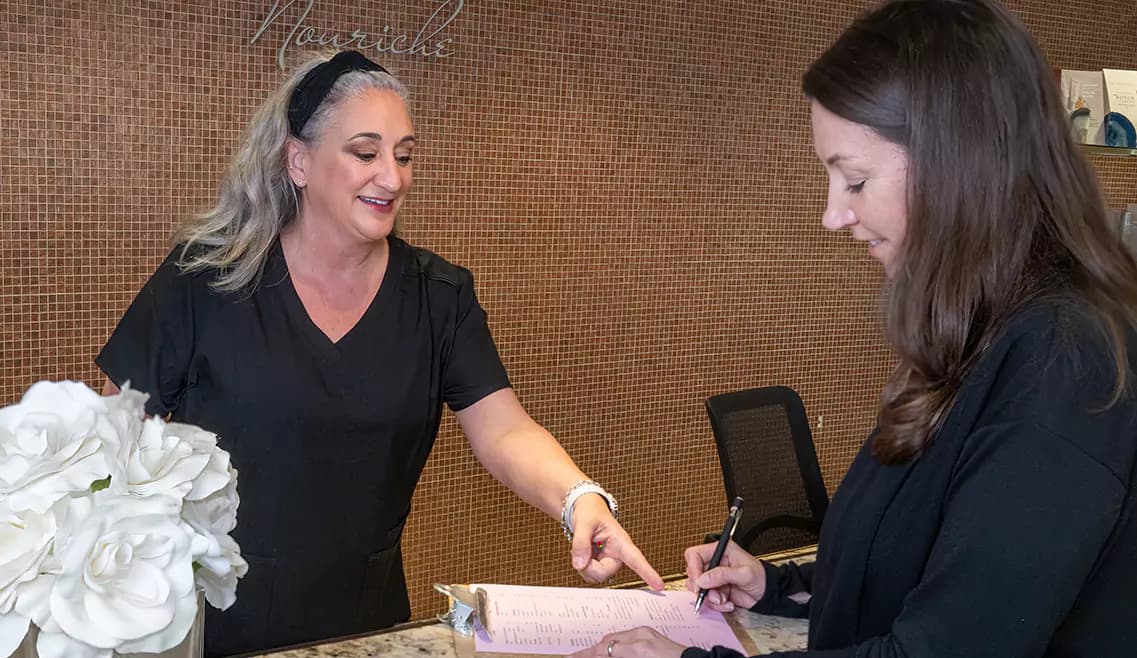

The practice: a growing Medicare opportunity
As Nouriche evolved, so did its patient mix. After a new physician joined from Ochsner (a large medical system), Nouriche's Medicare population became a larger part of the business. Medicare mix increased from 18% to 22%, representing nearly 2,000 Medicare patients in 2025.
That shift created a larger opportunity to offer chronic care services to patients who could benefit from more ongoing support between visits.
The problem: a program without the staff to run it
Just as the opportunity grew, Nouriche's dedicated CCM nurse retired. Replacing that role proved harder than expected. The clinic hired two nurses to take over, but neither worked out. Recruiting became time-consuming, interviews fell through, and the team kept losing momentum.
Even when staffing was available, the tools did not match how the clinic actually operated.
We'd start the timer, then get pulled to room a patient. By the time you got back, the timer had been running but you hadn't actually been doing CCM work.
- Kasy Mire Romero, Practice Manager, Nouriche
Like many independent practices, Nouriche's nurses do not work in silos. They support multiple providers, jump between patient needs, and handle operational tasks in parallel. A rigid timer-based system made that work harder, not easier.
By the time Kasy started looking for another solution, the clinic had patient demand for a chronic care program, but no practical way to run one.
The solution: from the Athena Marketplace to first enrollment in 27 days
Kasy discovered Sematic Health through the Athena Marketplace and scheduled a demo with Luke and Dr. Brown.
What stood out was that they actually understood Athena and how clinics operate. That made implementation much easier.
- Kasy Mire Romero
Implementation moved quickly:
- Dec 16, 2025 - Demo + break for the holidays
- Jan 9, 2026 - Pilot launch
- Jan 12, 2026 - First patient enrolled
Instead of creating a separate intake process, Kasy integrated enrollment directly into Nouriche's existing workflow using Athena's Enhanced Check-In. Medicare patients received pre-visit HTML consent forms before their appointments, so they could review the program in advance and decide before arriving.
Once a patient consents, Sematic verifies eligibility, determines the APCM tier, and generates a care plan in under two minutes. The platform then flags care gaps and chart issues automatically, so the team knows who to call without reviewing charts manually.
Sematic also made the program easier to manage on the billing side. With bulk billing and clearer visibility into reimbursement, the team can handle claims as enrollments grow, without growing headcount.
At the same time, Kasy redesigned the staffing model. Rather than hiring another local CCM nurse, the clinic brought on a virtual nurse in the Philippines, a certified respiratory therapist who manages the program remotely.
Without Sematic, Kasy estimates the same workload would require 50 to 60 hours per week. With the platform handling enrollment, care plans, and billing, the virtual nurse runs the program in roughly 30 hours.
The results: from a stalled program to 425+ enrollments
1. From demo to first enrollment in 27 days
Nouriche moved from initial demo to first patient enrollment in under a month. Instead of building a new workflow from scratch, the clinic launched APCM within its existing Athena processes.
2. A staffing model the clinic could actually sustain
Sematic helped Nouriche move away from a fragile model. By combining workflow automation with a remote clinical hire, the clinic was able to run the program in roughly 30 hours per week instead of an estimated 50 to 60.
3. A new revenue stream with clearer financial visibility
APCM was entirely new revenue for Nouriche. The practice had never successfully run the program before. Over the most recent month, submitted claims grew 55.2% month over month, while estimated submitted revenue grew 55.3%.
Sematic also gave the clinic clearer visibility into program performance. The dashboard shows projected revenue, locality rates, and reimbursement by enrollment mix in real time, allowing the team to plan based on actual billing data rather than estimates.
Instead of guessing how the program might perform, Kasy can now see how program activity translates into expected reimbursement as the program grows.
Kasy's advice to other practices
For clinics that assume chronic care programs require a large internal team, Kasy sees it differently.
For a practice like ours, it's a no brainer.
- Kasy Mire Romero